Table of Contents
ToggleDiscover how outdoor kitchen installation in Long Island transforms spaces for year-round use. Explore tips for insulation, heating, and design comfort.
Introduction
Most people think outdoor kitchens are just for sunny months, but that’s not always the case, especially in Long Island. With the right setup and thoughtful planning, your outdoor kitchen doesn’t have to shut down when the temperature drops. In fact, using your space during chillier months can bring a whole new level of enjoyment. From cozy evening dinners to weekend bonfires, colder weather gives your outdoor kitchen a different kind of charm that’s quieter, more intimate, and just as enjoyable.
If you live in Huntington or nearby, you already know how long the cold season can feel. Instead of letting that extra space go unused from late fall through early spring, more homeowners are finding smart ways to make their outdoor kitchens work year-round. That means using heating tools, selecting the right materials, and designing for comfort no matter the time of year. If you’re putting in a new space or updating an old one, now’s the right time to think ahead and make it cold-ready.
Insulating Your Outdoor Kitchen
Long Island winters can be unpredictable. Freezing nights can show up as early as late October and stick around till March. If your outdoor kitchen has appliances, plumbing, or storage built in, insulation isn’t just helpful, it becomes a must.
Here are a few good ways to help hold in the warmth and block out the cold:
– Install foam board insulation inside island frames or cabinets to reduce draft and keep pipes from freezing
– Add weather-stripping around doors on built-in storage or fridges to stop cold air from creeping in
– Wrap any exposed plumbing or gas lines with pipe insulation sleeves; some also use heat tape to prevent freezing
– Use insulated covers for built-in grills or sinks when they’re not in use to protect them from frost damage
If your outdoor kitchen includes countertops or seating that get constant exposure, choosing heavy-duty materials helps here too. Granite and engineered stone perform better than porous materials, and sealed wood will hold up longer. Cover countertops or bar tops when not in use to stop ice build-up and limit cracking from extreme temperature shifts.
One homeowner in Huntington insulated the inside of their custom-built grill base and added a protective wall around their main prep station. That small change blocked cold wind, protected the grill, and gave them extra space to cook even during December. Simple features like that can make the difference between a summer-only setup and one that stretches into the colder seasons.
Integrating Heating Solutions
No amount of insulation will make the outdoors feel like indoors, but targeted heating can add real comfort. A warm island for prep and a cozy seat by a flame can change how you use your outdoor kitchen for months at a time.
There are a few ways to build heat into your setup:
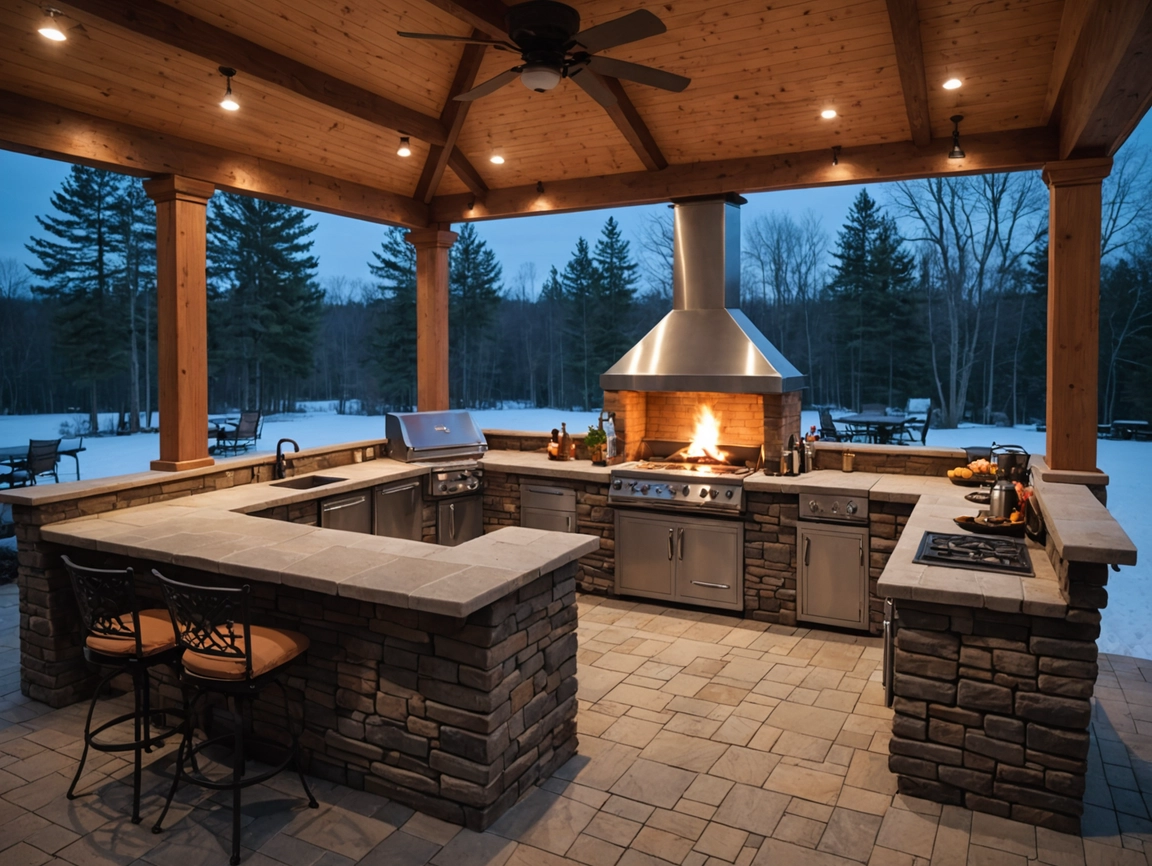
1. Outdoor fireplaces – These can be wood-burning or gas-powered and create a focal point that pushes warmth across a wider area
2. Overhead heaters – Mounted above eating or prep areas, these run on electricity or gas and heat small zones quickly
3. Freestanding patio heaters – Moveable and easy to install, these handle heat distribution in open corners or colder spots
4. Warming drawers – Tucked into your setup, these can keep cooked food warm or even warm your plates before serving
When placing heating elements, consider wind direction and where people will most likely gather. Block cold gusts with built-in walls, tall planters, or privacy screens. Many people put heaters where it looks symmetrical, but function matters more. Create warm zones in the areas you plan to use the most.
Layering heat sources works best. Combining two or three heating methods across different zones helps create a seamless experience. A built-in fireplace near the lounge area, and an overhead heater near the prep zone, gives you comfort throughout the entire space without cold gaps in between.
Weatherproofing Appliances and Materials
Picking the right appliances and finishes is key to keeping your outdoor kitchen durable and reliable in cold conditions. Some materials just handle freezing better than others, and planning upfront can help your setup hold strong all winter.
Stainless steel stands out when it comes to appliances. It resists corrosion and doesn’t warp or crack in cold temperatures. Whether it’s your fridge, cabinets, or grill, stainless steel is a safe bet for outdoor use year-round.
For surfaces, look into granite or high-quality concrete for countertops. Both are tough against freeze-and-thaw cycles and can take a beating without showing damage. Sealing those surfaces before winter adds a buffer against moisture intrusion and helps prolong their life.
Plumbing and electrical systems need attention too. Freeze-proof outdoor faucets and hoses prevent pipes from cracking. Make sure your electrical setups have proper outdoor-rated insulation to avoid shorting out when rain or frost roll in.
All these small upgrades together can mean the difference between constant repairs and a smooth-use kitchen that’s always ready, no matter the weather.
Creating Comfortable Seating Areas
Comfort matters even more when it’s cold out. A well-thought-out seating area turns your outdoor kitchen into a warm hangout spot instead of a space you just pass by in winter.
Start with the right fabrics. Look into insulated cushions made with weatherproof materials like Sunbrella. These stand up to moisture and keep their shape longer, even through winter use.
To keep things cozy, add big pieces like an outdoor sectional or padded bench that you can lay throws and blankets over. These extras aren’t just about comfort—they also help hold body heat on chilly days.
Covers matter too. Keep heavy-duty furniture covers on hand for when it snows or rains. They help protect seating areas from moisture and ring in spring with less cleaning.
If your space allows, adding a partial pergola or a gazebo can make a big impact. These structures block the wind and help trap heat from your heaters, making the whole setup feel more like an outdoor room. Natural windbreaks using hedges or privacy screens can work just as well and add some visual texture at the same time.
Preparing for Seasonal Transitions
Winter doesn’t last forever in Long Island, and that means your setup should shift with the seasons too. Handling these transitions properly will protect your investment and keep things working longer.
When the season starts to change, move delicate items inside. Store things like decorative pillows, table linens, and anything labeled non-weather-resistant. Disconnect hoses to avoid freezing and drain any water lines. That quick step stops internal pressure build-up and reduces the risk of burst pipes.
In spring, spend time inspecting your kitchen. Deep-clean your appliances, wipe down surfaces, and check any electrical or gas connections. Refresh your outdoor cushions and test out heating tools to make sure they’re still running smoothly.
These transition habits might feel small, but they go a long way in making sure your outdoor kitchen keeps working well and looking great every time you’re ready to use it.
Keep the Good Times Going Year-Round
Adapting your space for colder weather means more chances to enjoy it. Whether it’s warming up by the fire, cooking a winter meal outside, or just having a quiet evening under the stars, a cold-ready outdoor kitchen opens up new ways to use your yard past summer.
With thoughtful planning, you won’t have to pack it all in once the temperatures drop. Insulating key areas, adding reliable heating options, and selecting the right furnishings all come together to create a space that’s just as charming in December as it is in June. A Long Island winter might slow things down, but it doesn’t mean your outdoor kitchen has to close for the season.
Extend the versatility of your outdoor living space with a well-prepared setup that can handle all seasons. If you’re considering outdoor kitchen installation in Long Island, Pure Masonry & Landscape Contractors offers the expertise needed to design a cozy, functional space that’s built to handle chilly nights and year-round use.