Table of Contents
ToggleStop Winter From Destroying Your Hillside Patio
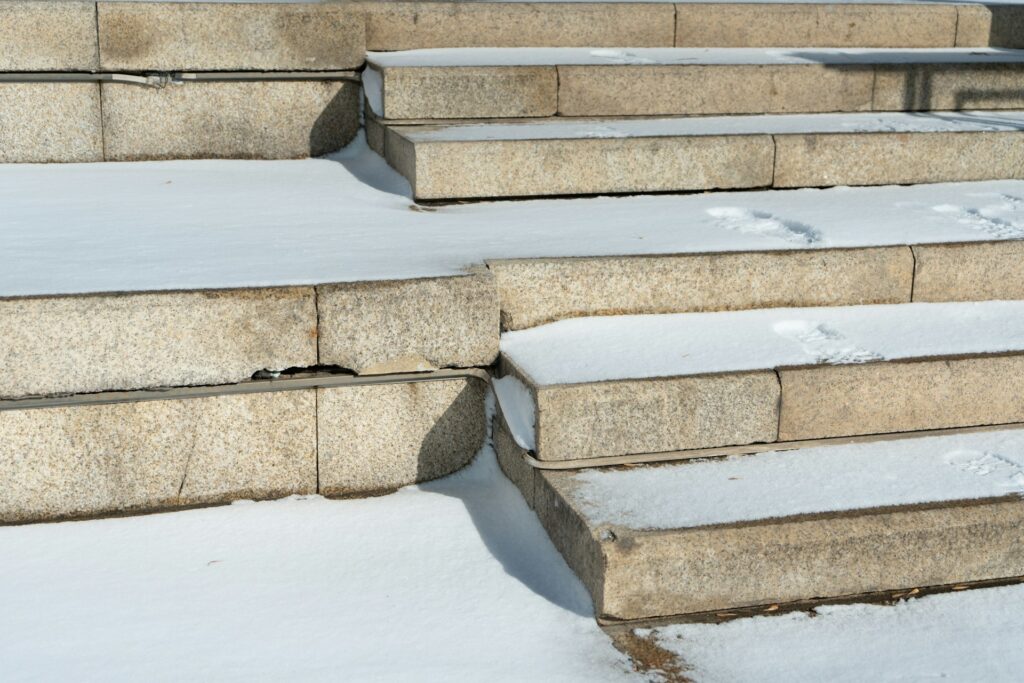
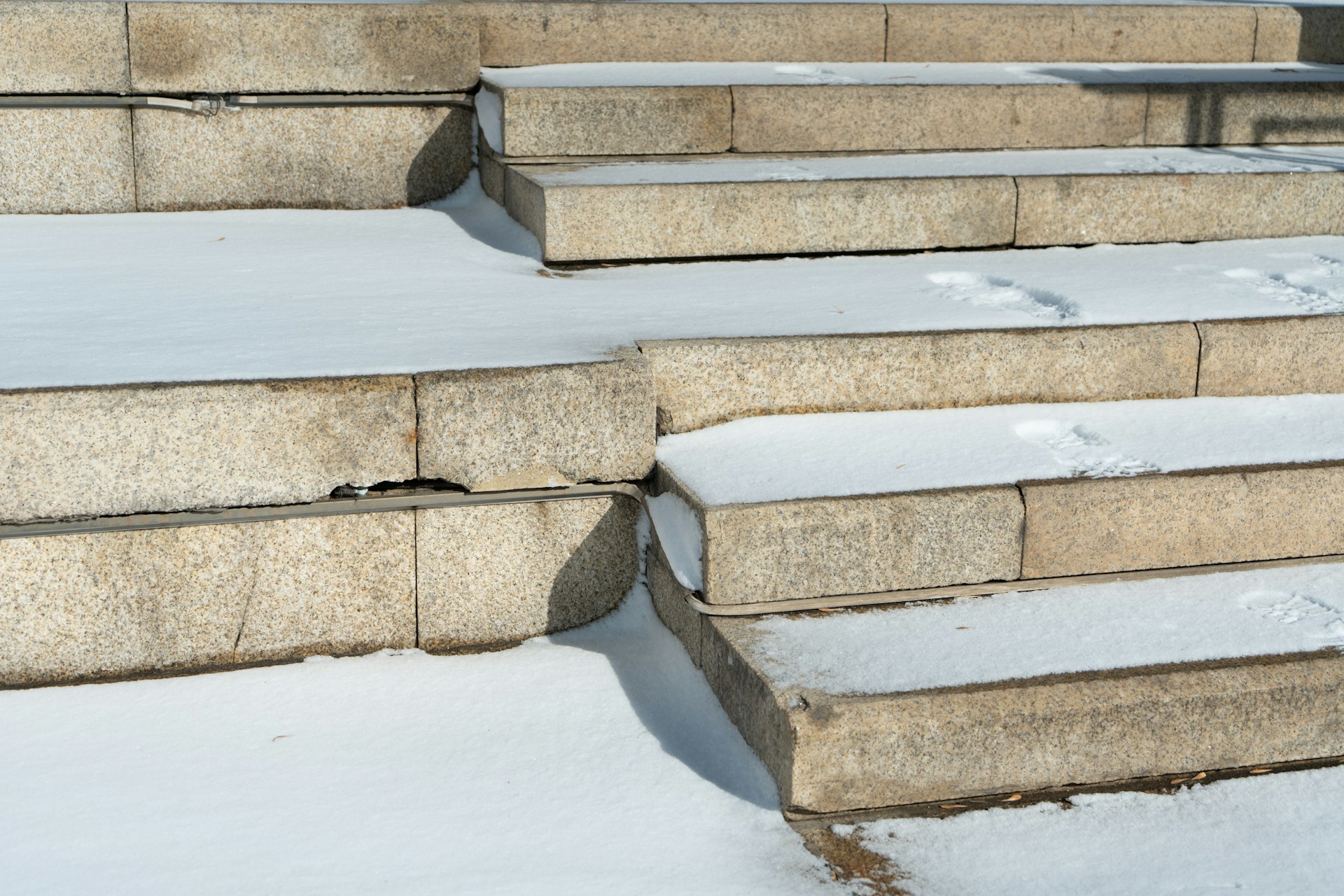
Sloped driveways, walks, and patios on Long Island look great, but winter is hard on them. Water works down into tiny gaps, then freezes and expands. On a hill, that pressure is not just up and down; it is also sideways, which slowly pushes pavers, steps, and walls out of place.
When that damage adds up, you get loose steps, sunken tire tracks, and joints that keep washing out. That is not just annoying; it can be a trip hazard and can let more water into your base every storm. In this article, we will walk through how smart material choices, better jointing sands, and stronger edge details keep sloped masonry and landscaping safer and more stable year after year on Long Island’s North Shore.
How Freeze, Thaw, and Salt Attack Long Island Slopes
Our coastal climate swings above and below freezing a lot. That means water in your joints and base keeps freezing and thawing. Each cycle, the ice expands, then shrinks and that constant motion slowly breaks apart weak joints and thin surfaces.
De-icing salts make this worse in a few ways:
- Salts pull more moisture into concrete and stone
- They can cause surface flaking and scaling on poor-quality concrete
- They speed up breakdown of weak mortar and joint sand
- They can corrode metal that is buried too close to the surface
On a slope, gravity joins the fight. Meltwater runs downhill fast and cuts channels in any loose sand. Freeze-thaw movement already wants to lift pavers. The slope adds a sideways shove that slowly walks your patio or driveway downhill, especially if the edges and base were not designed for those forces.
Material Choices for Steep Grades: Pavers vs. Bluestone vs. Concrete
The first big choice is what you build with. On Long Island slopes, we usually look at three main options: concrete pavers, bluestone, and poured concrete.
Concrete pavers
- Made in controlled conditions, so they handle freeze-thaw very well when installed on a proper base
- Small and interlocking, so they resist cracking and can be taken up and reset if needed
- Joints let water drain, which is helpful if the base and drainage are designed correctly
Bluestone
- Natural stone with rich color and character
- Available in different thicknesses for patios, steps, and landings
- Needs the right thickness and support on slopes so pieces do not flex and crack
Poured concrete
- One solid slab with no joints to shift, which can feel strong at first
- Can crack from freeze-thaw stress or soil movement, especially on clay or loam slopes
- Harder to repair in small sections without visible patches
A hybrid design can work very well on North Shore hillsides. For example, we may design:
- A concrete base with a paver or bluestone overlay for extra strength under vehicles
- Paver fields for driveways, with bluestone treads on steps for a clean, classic look
- Bluestone landings between paver runs on steep walkways for better control and drainage
The right mix comes down to how steep the grade is, how you use the space, and what fits your home’s style.
Jointing Sands and Edge Details That Survive Winter
Joints are one of the first things to fail on a slope. Regular sand or poorly compacted joints wash out fast when meltwater races downhill. Once the joints open, more water gets into the base, ice expands, and pavers or stones start to move.
Polymeric sand helps a lot when it is installed the right way. It has binders that harden when lightly watered, so it locks between pavers yet stays slightly flexible. On slopes, that only works if:
- The base is compacted in proper layers
- Pavers are vibrated and set tight before sweeping sand
- The sand is fully packed into joints
- Water activation is light and controlled so the surface does not crust or stain
On steeper grades or high-traffic spots, we may step up to more advanced jointing details:
- Stabilized joint sands with better bonding for driveways
- Flexible joint compounds along heavy-use paths or at the base of stairs
- Wider and deeper mortar or sand joints with bluestone so water has room to move without popping the edges
Strong edges are just as important as good joints. Edge restraints keep your pavers from drifting downhill like tiny sleds. Options include:
- Concrete toe kicks, buried along the low sides of the slope
- Heavy-duty plastic or aluminum edging spiked deep into the base
- Mortared bluestone or concrete borders that act as both trim and restraint
We also look closely at drainage. The base should have the right pitch so water moves where we want it. In some spots, that might mean adding French drains along the side, or using permeable paver systems with open-graded stone so meltwater can drain down instead of racing across the surface. One common rule: do not send a downspout straight onto a sloped patio or driveway.
Design and Maintenance Tips for Long Island Slopes
Layout can make or break a hillside project. Long, straight ramps are harder to keep safe and stable. Terracing the grade into shorter runs and landings takes pressure off each section and gives water places to rest and drain.
A few smart layout moves:
- Break steep walks into short runs with flat landings
- Use generous tread depth and consistent riser height on stairs for safe winter footing
- Add small retaining walls or curbs at the sides to guide water away from joints
Surface texture and color matter in winter. Smoother finishes get slick when wet or icy. On slopes, we lean toward textured pavers or thermal-finished bluestone for grip. Darker tones can help surfaces warm up faster on sunny winter days, which can help melt light ice and snow.
North Shore soils often have a lot of clay and loam. These can hold water, which makes freeze-thaw heaving more likely. That is why base depths, geogrid use, and drainage details need to match each site instead of following a one-size rule.
Winter care finishes the picture. Good habits include:
- Using de-icing products that are safer for pavers, stone, and concrete, not just throwing rock salt everywhere
- Adding sand or grit for traction on very cold days when melting is not realistic
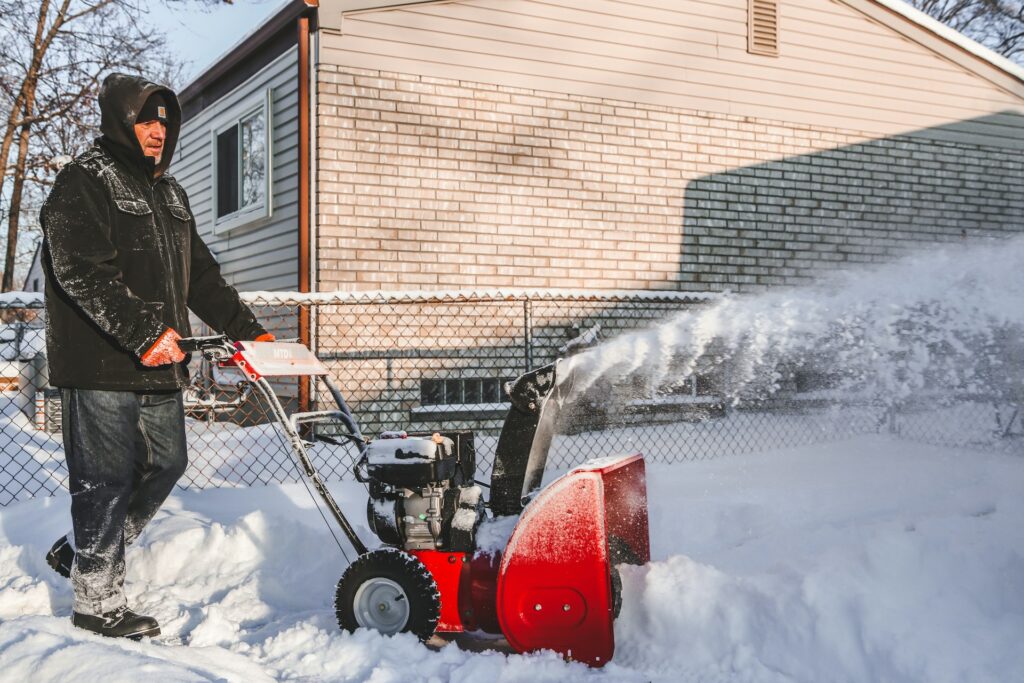
- Clearing snow with rubber-edged shovels or plow blades so you do not catch and chip edges
- Pushing snow downhill in ways that do not dump heavy piles right on your borders
A simple seasonal check, before and after winter, can catch problems early:
- Joints that are opening or washing out
- Edging that has shifted even slightly
- Low spots that hold water or slush
- Small cracks in concrete or stone that might widen with future freezes
FAQs About Freeze-Thaw Damage on Long Island Slopes
Why do my pavers move more on sloped areas than on flat ones?
Gravity and water both work harder on a slope. Meltwater flows downhill and erodes joints, and each freeze-thaw cycle pushes pavers slightly sideways. If the base or edges were not designed for that, movement shows up faster on hills.
Is rock salt safe for my patio and driveway, or should I use something else?
Heavy rock salt use can be rough on concrete and natural stone and may speed up joint failure. Many homeowners choose de-icers labeled safe for concrete or stone and mix that with sand or grit for traction, especially on sloped areas.
Can existing concrete steps or driveways on a hill be overlaid with pavers or bluestone?
In many cases, yes, as long as the existing concrete is structurally sound and drains properly. The overlay, bedding layer, and edges all need to be designed so they do not trap water or create trip edges.
How steep is too steep for a paver driveway or walkway on Long Island?
There are practical limits for both safety and stability. Very steep grades might be better handled with terraces, steps, or a mix of materials instead of one long paver ramp. A local masonry and landscaping professional can review the slope and suggest safe options.
How long should a properly built sloped patio or driveway last in our climate?
With the right materials, base, drainage, and winter maintenance, a well-built sloped patio or driveway can serve for many years. The key is building for freeze-thaw and salt from day one, then checking and fixing small issues before they turn into larger structural problems.
Get Started With Your Project Today
If you are ready to transform your outdoor space, our team at Pure Masonry & Landscape Contractors is here to help. Explore how our masonry and landscaping services can create a functional, beautiful yard tailored to your needs. We will walk you through design, materials, and installation so you feel confident at every step. To talk through ideas or request an estimate, simply contact us.