Table of Contents
ToggleLand Clearing Choices That Make or Break Your New Pool
Land clearing is the first real step from “pool idea” to “pool in the ground.” The choices you make at this stage decide how smooth the rest of the project feels. Good clearing sets your pool builder up for success. Poor clearing leads to delays, surprise changes, and sometimes failed inspections.
On Long Island’s North Shore, many homeowners start planning pools in the fall so digging can start as soon as the weather cooperates. That timing makes sense, but only if the land clearing services are planned around permits, access, and drainage. Land clearing for a pool is more than just cutting trees. It usually includes clearing trees and brush, rough and fine grading, building access paths for machines, handling drainage prep, and hauling away debris.
Our goal here is simple. We want to give you a practical, North Shore-focused checklist to evaluate land clearing services for a new pool, so you can avoid erosion problems, surprise add-ons, and inspection issues later in the process.
Reading Your North Shore Property Before Any Tree Comes Down
Long Island’s North Shore is not a flat, sandy lot. Many backyards sit on slopes, with a mix of clay, rocks, and mature trees packed close to property lines. Some homes back up to wetlands or have tight space between houses. All of this changes how land clearing should be done.
Before any tree comes down, a qualified contractor should walk the property with you and your pool plan. That site assessment should include:
- Locating underground utilities and septic areas
- Marking the pool footprint and planned patios or decks
- Studying slopes and low spots where water already collects
- Planning access routes for excavators, loaders, and concrete trucks
We also look for trees and stumps that sit close enough to affect the future pool shell, plumbing, or coping. Even roots outside the shell can cause trouble if they sit under future decking, retaining walls, or patio areas.
Seasonal timing matters too. Planning land clearing in early fall for a late winter or early spring start can help:
- Reduce mud and rutting by avoiding the softest ground periods
- Protect the root systems of trees you want to keep
- Coordinate with pool builders and inspectors for a smoother schedule
Done right, the yard is read like a map before the first cut is made.
What Professional Land Clearing for Pool Sites Should Include
Land clearing for a pool is not the same as clearing a full lot for a new home. The goal is to open the space just enough so the pool, drainage, and outdoor living areas work together for the long term.
A professional land clearing scope for pool work should usually include:
- Selective tree removal, not blanket clear-cutting
- Stump grinding or removal in and around the pool and patio areas
- Brush and root removal where they conflict with structure or drainage
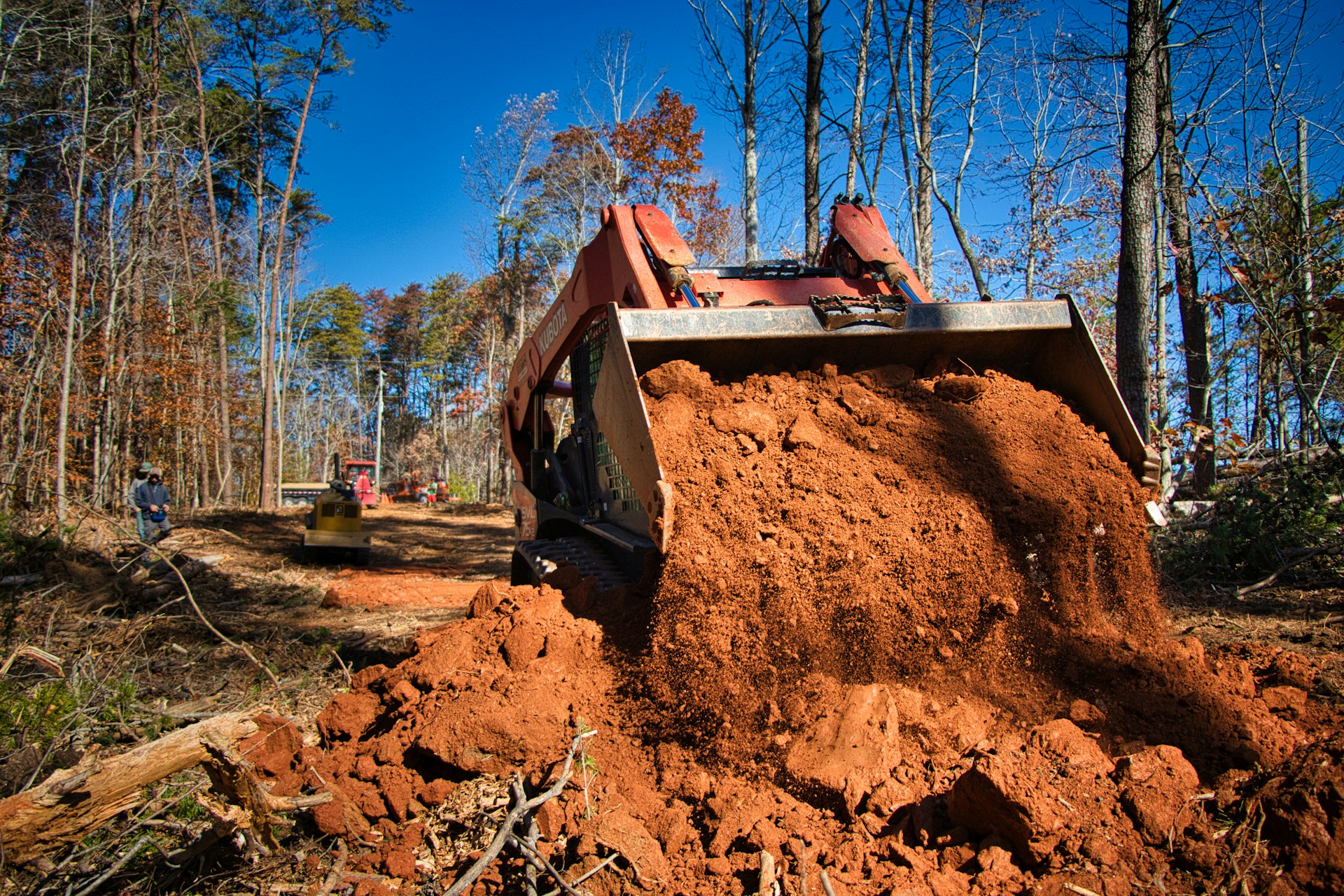
- Rough grading to create the basic pool pad and access routes
- Fine grading where needed to tie into existing lawn or patios
For pool sites, drainage planning is a big piece of the puzzle. A good contractor thinks about where water will move once your pool and patios are in place. That can mean:
- Shaping the ground so water does not run toward your house or pool
- Preparing areas for French drains or dry wells if needed
- Setting grades to match future retaining walls, steps, or raised patios
Debris and waste handling is another area where quality shows. You want a clear plan for what happens to:
- Tree trunks, branches, and stumps
- Brush and roots
- Extra soil and rocks from grading
Some material can be chipped on site, while other loads should be hauled off. The key is that the site is left safe, stable, and truly ready for the pool builder, not half-finished with piles and hazards scattered around.
Permits, Protection, and Pool-Specific Compliance
On the North Shore, many towns have rules about tree removal, limits on how much of a lot can be cleared, and how slopes must be protected from erosion. Even “pre-pool” work can fall under these rules.
Before land clearing starts, your contractor should talk through:
- Any tree preservation or replacement rules for your town
- Limits on clearing near wetlands or steep slopes
- Erosion control measures like silt fence or straw where soil will be exposed
Utility and property protection is just as important as permits. A careful contractor will:
- Arrange utility mark-outs before digging or stump removal
- Flag and protect septic systems, dry wells, and existing patios or walkways
- Plan work to protect the roots of trees you want to keep, both yours and neighbors’
Missteps here can slow or block your pool permit later, especially if trees are removed without permission or erosion issues show up in inspections.
Good documentation also helps. That can include:
- Photos before and after clearing
- Simple grading and drainage plans
- Notes that match what your pool builder will submit to the town
When your land clearing contractor understands local codes and typical North Shore conditions, the whole pool approval process tends to go more smoothly.
How to Vet Land Clearing Pros for Your Long Island Pool
Not every land clearing contractor works with pool sites all the time. You want someone who understands how pools, retaining walls, and patios all fit into the same plan.
Here are useful questions to ask when you talk to potential contractors:
- How often do you clear and grade specifically for new pools?
- Are you familiar with North Shore slopes, rocky areas, and clay soils?
- Do you also handle hardscaping like retaining walls and patios around pools?
- How do you coordinate your work with pool installers and inspectors?
Ask for proof points, not just verbal promises. Helpful items include:
- Current insurance certificates and any required licenses
- References from recent pool-related projects in nearby towns
- Before and after photos of grading, retaining wall, and pool pad work
- A clear written scope that covers drainage prep and cleanup, not just tree cutting
Be careful of offers that only focus on the lowest price. Warning signs include:
- Very vague estimates with no mention of grading or drainage
- No plan for erosion control on hillsides or near neighbors
- Ignoring the need for future patios, deck footings, or retaining walls
The cheapest bid can end up costing more if the pool builder has to redo grading, fix drainage, or wait for more clearing just to get started.
Planning Your Pool Site Like a Pro and Land Clearing FAQs
The best time to plan is before the ground gets hard and the contractors’ schedules fill up. Using fall and early winter to arrange site assessments lets you:
- Lock in a spot on the calendar for clearing and grading
- Coordinate pool design with real-world access and drainage needs
- Avoid rushing through permits or last-minute changes
A full-service firm that handles land clearing, grading, drainage, retaining walls, patios, and outdoor living features around pools can tie all the parts together so your yard works as a single outdoor space, not a patchwork of separate projects.
Here are some common questions we hear about land clearing services before pool installations:
Q: How far in advance should I schedule land clearing before a Long Island pool install?
A: Many homeowners start planning clearing a season ahead of the actual dig. That gives time for permits, inspections, and any needed design tweaks before machines show up.
Q: Can land clearing and pool excavation be done in the same phase, or should they be separate?
A: They can be combined, but many projects work better when clearing and rough grading happen first, then the pool excavation crew works on a clean, stable site.
Q: Will land clearing damage my remaining trees or neighbors’ properties, and how is that prevented?
A: A careful contractor sets protection zones, plans equipment paths, and uses boards or mats where needed to reduce root damage and soil compaction.
Q: How do land clearing decisions affect future patios, retaining walls, and outdoor kitchens around the pool?
A: Grades, access, and soil conditions set up where hardscapes can go, how high walls need to be, and how water will move around the yard for years.
Q: What should be included in a written estimate for land clearing services for a new pool?
A: Look for clear notes on tree and stump removal, grading, access paths, drainage prep, erosion control, debris handling, and what condition the site will be left in when the pool builder arrives.
Get Started With Your Project Today
If your property is ready for a clean, buildable start, Pure Masonry & Landscape Contractors is here to help. Our expert land clearing services remove obstacles safely and efficiently so you can move forward with confidence. Tell us about your goals and we will recommend a clear, practical plan and timeline. Have questions or need a quote fast? Contact us today to take the next step.