
Table of Contents
ToggleStop Patio Flooding Before It Starts
A brand-new patio should feel like an upgrade, not a headache every time it rains. On Long Island, a strong spring storm can turn a nice paved area into a slick, flooded mess if the water has nowhere to go. Water sits on the surface, seeps toward your house, and suddenly that fun outdoor space feels unsafe and stressful.
That is why drainage design needs to sit right next to paver style, pattern, and color when you plan patio installation in Long Island. Our coastal weather, clay-heavy pockets of soil, and high water tables can be tough on hardscapes. The good news is there are smart ways to move water where it needs to go.
Most homeowners who call us ask about three main options: channel drains, permeable pavers, and dry wells. The truth is, the best patios usually use a smart mix of these tools, not just one. Let us walk through how each works and when it makes sense to use them.
Why Long Island Patios Need Smarter Drainage
Long Island patios deal with a lot. We get heavy spring rains, strong nor’easters, fast snowmelt, and wet fall storms. Water can hit your patio from above, run off the roof, or move across the yard. If it cannot soak in or drain away, it looks for the lowest point, which is often right against your foundation.
Some common problems we see include:
- Puddling near the house or along the middle of the patio
- Water sitting against the foundation or seeping into window wells
- Icy patches in winter where water pools and refreezes
- Sinking or rocking pavers from washed-out base material
- Slimy, green growth and mold in the joints or on the surface
These are not just annoying. Poor drainage can shorten the life of your patio, weaken the base, and add moisture pressure against your home. It can also make your outdoor space less safe, with slippery areas and uneven surfaces.
Planning drainage before patio installation in Long Island helps to:
- Protect the foundation and help keep basements drier
- Keep water away from doors and thresholds
- Reduce heaving and settling in freeze-thaw cycles
- Make the patio more comfortable to walk on after storms
When drainage is built into the design from the start, your patio looks better and lasts longer.
Channel Drains, Permeable Pavers, and Dry Wells Explained
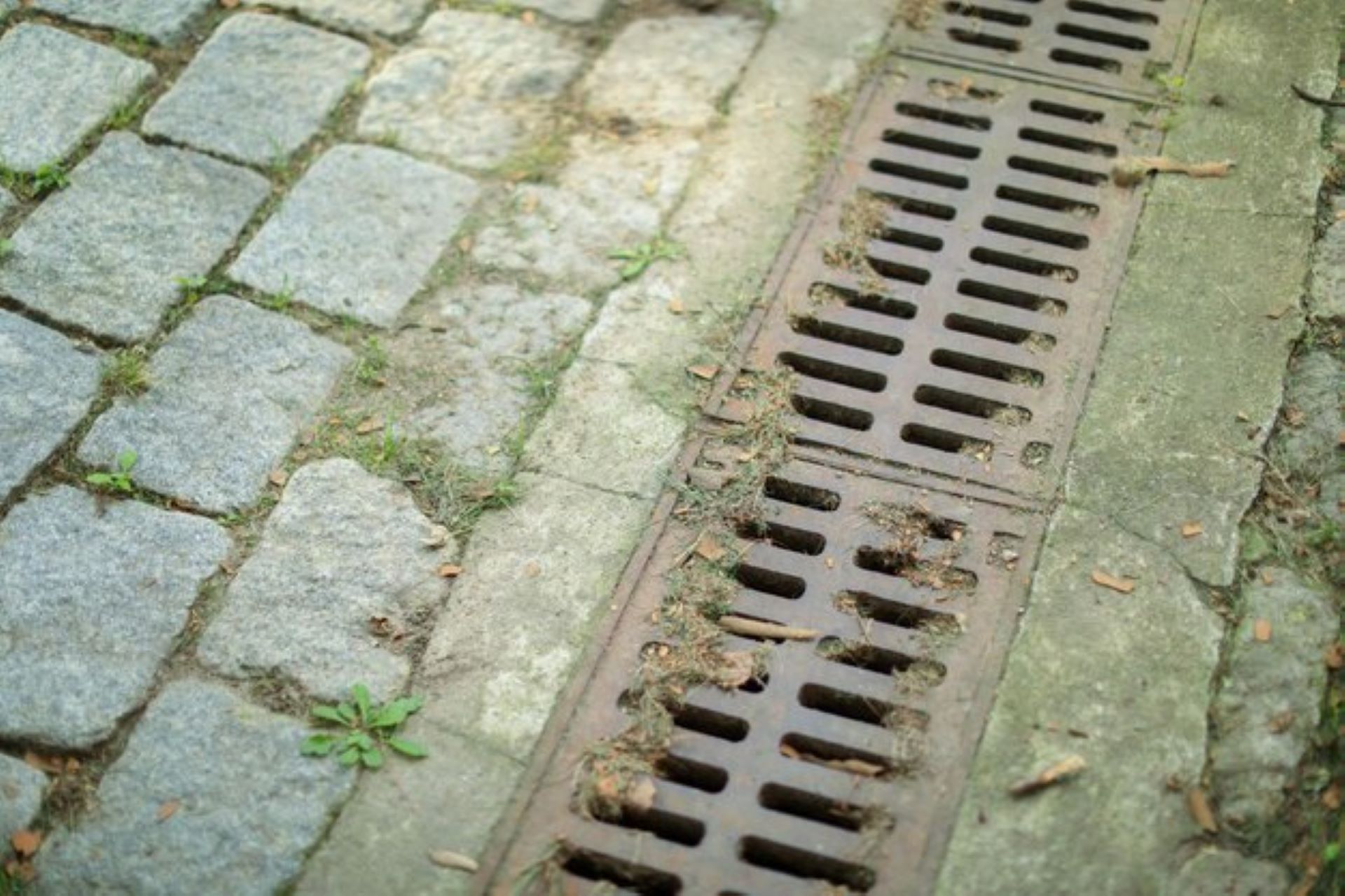
Channel drains are long, narrow drains that sit in the surface of the patio with a grate on top. Under that grate is a trench that collects and moves water away.
They work best:
- At the base of steps or stoops
- Across sliding door or patio door thresholds
- At the low edge of a patio that slopes toward the house or garage
- In problem areas on an existing patio that tends to flood
Channel drains are very good at catching heavy surface runoff quickly. They take up little space, can blend into the design, and are often a strong choice when we need to fix a drainage issue without tearing out the whole patio. The key is getting the slope right and making sure the drain has a place to send the water, like a dry well or daylight outlet. They do need regular cleaning so leaves and dirt do not block the grate or pipe.
Permeable pavers work in a different way. Instead of pushing water across the surface into a drain, they let water pass through the joints and into an open-graded stone base. From there, the water soaks into the soil below if the ground can handle it.
Permeable patios can:
- Cut down on puddles and surface glare after storms
- Help filter water through stone and soil
- Reduce how much water hits yard drains or nearby areas
- Create a high-end look that still manages runoff well
They are not perfect for every Long Island property. Many areas have clay or compacted soils that do not soak up water well. In those yards, permeable systems may need extra engineering, like deeper bases or underdrains. The joints can also clog over time and need vacuuming or cleaning, and the upfront build can cost more than a standard paver patio.
Dry wells are hidden underground systems made of gravel or special chambers. They collect water from things like channel drains, yard drains, or downspouts, then slowly release it into the surrounding soil.
Dry wells help when:
- You cannot send water to the street or a storm drain
- You want to keep discharge lines and outlets out of sight
- You need to move water away from the house and protect nearby lawn areas
They do need the right conditions to work well. The soil must drain at a reasonable rate, and local codes often set rules for how close a dry well can be to a house, septic, or property line. In some Long Island neighborhoods with high water tables, dry wells may need to be deeper, moved farther away, or replaced with a different solution.
Choosing the Right Combo for Your Long Island Patio
So which drainage option should you pick? The answer usually depends on a few key details about your yard and how you plan to use the space.
We look at:
- Soil type: sandy, loamy, or clay-heavy
- Slope of the yard and which way water naturally wants to flow
- How close the patio sits to the house, doors, and windows
- Size and shape of the patio and any nearby walkways
- Roof runoff patterns and downspout locations
- Whether we are building new or fixing an existing problem
Here are a couple of simple examples to show how different combos can work:
- Small backyard with limited slope and a basement: We might grade the patio gently away from the house, add a channel drain along the house edge, and pipe that drain into a dry well in a rear corner of the yard. That way, surface water is caught quickly and sent underground away from the foundation.
- Larger property with decent, sandy soil: A permeable paver patio with a properly built stone base can let most water soak into the ground below. We may still add subtle grading and a backup yard drain at the low side so the system can handle very heavy storms.
On many projects, the best answer is a blend: channel drains near the house, a dry well out in the yard, and careful grading or permeable areas to spread out and manage the water load. A local contractor who knows Long Island codes and groundwater patterns can design a system that fits both your property and the rules in your town.
FAQs About Long Island Patio Drainage
How do I know if my existing patio needs better drainage?
Look for water that sits longer than a day after rain, puddles against the house or steps, green or slimy spots, sinking pavers, or a musty basement smell after storms. These are all signs that water is not moving away the way it should.
Are permeable pavers worth it on Long Island?
They can be a great choice when the soil drains well and there is enough depth for the stone base. In tighter, clay-heavy yards, a hybrid system that uses standard pavers plus channel drains and dry wells may be more practical and easier to maintain.
Do I need permits for patio drainage systems?
Many towns on Long Island have rules about dry wells, how close they can be to property lines or structures, and where water can discharge. A local professional should review the codes and handle any needed approvals as part of the design.
Can I fix drainage on an existing patio without tearing it out?
Often yes. Options can include cutting in channel drains, adding new drain lines at the edges, regrading the surrounding soil, or tying patio drains into a new dry well. Very severe settling or flooding may still call for a partial rebuild of the base.
How much extra does proper drainage add to patio installation in Long Island?
The cost depends on your soil, slope, and which systems are needed. While it does add another layer to the project, investing in drainage upfront usually saves money later by helping you avoid damage to pavers, foundations, and nearby planting beds.
Get Started With Your Project Today
Transform your yard into a space you love spending time in with expert patio installation in Long Island from Pure Masonry & Landscape Contractors. We take the time to understand how you want to use your outdoor area so your new patio looks great and works perfectly for your lifestyle. If you are ready to talk through ideas, timelines, and budget, contact us so we can help you plan the next steps.