Table of Contents
ToggleIs Your Patio Secretly Damaging Your Home?
Water should not sit on your patio, creep toward your house, or pop pavers loose. When the grading and drainage are wrong, that is exactly what happens. On Long Island, where many homes sit on tight lots, even a little water in the wrong place can lead to foundation problems, damp basements, and damaged hardscapes.
A patio that is not pitched correctly can push water against your home instead of away from it. Over time, this breaks down the base under the surface, leads to cracking or settling, and creates slippery, unsafe walking areas. With smart grading, the right drainage design, and professional repairs, you can protect both your patio and your entire property for years.
Clear Signs Your Patio Has Drainage and Grading Problems
One of the easiest ways to spot trouble is to simply watch what happens after a good rain.
Puddling and standing water
If you see water sitting on your patio long after the rain has stopped, that is a red flag. Common problem spots include:
- Low areas in the middle of the patio
- Along the house or steps
- Where pavers meet concrete, asphalt, or lawn
When water lingers for hours or days, it can lead to algae growth, slimy surfaces, staining, and slow failure of the base below. Over time, these soft spots spread, and the patio starts to sag or crack.
Sloping toward the house or structures
A patio should have a gentle pitch away from your home, typically about 1/8 inch to 1/4 inch per foot. You might notice problems if:
- Water flows toward the foundation during rain
- Siding stays damp along the bottom after storms
- You see faint water lines on the house near the patio edge
When water is pushed against walls or the foundation, the risks grow: moisture inside, mold, and movement in the structure. What starts as a slight slope mistake can turn into a much bigger issue.
Joint washout, settling, and heaving
Joint washout shows up when the sand or polymeric sand between pavers disappears. Joints look wider, plants or moss grow in the gaps, and the surface feels loose underfoot.
Settling looks like sunken or dipped areas, while heaving shows as raised or lifted pavers. Both usually mean something is wrong below the surface, often tied to poor compaction or trapped water in the base. On Long Island, changing temperatures and repeated wet and dry cycles can make these problems worse, especially when drainage is poor.
Why Long Island Patios Need Professional Drainage Planning
Long Island properties have their own set of challenges. Some yards have heavy clay pockets that hold water, others have sandy soil that moves easily, and many have mixed fill from past construction. All of that affects how water travels under and around a patio.
Local lots also tend to be:
- Smaller, with limited space for water to drain
- Close to neighbors, streets, or retaining walls
- Full of existing features like pools, walkways, and driveways
That means grading is not just “tilt the patio a bit and call it done.” Water has to be given a safe path away from the house, the patio, and nearby structures without creating new problems somewhere else.
How grading and drainage affect patio lifespan
A patio is only as good as the base under it. Correct pitch and a well-built base help pavers, stone, and concrete hold their shape for a long time. When water is directed away from the surface and away from the base, it lowers the chance of frost damage, shifting, and cracking.
On the other hand, water that seeps into the base and stays there weakens everything. Patios then need repeated spot repairs instead of one solid fix. Thoughtful drainage and grading services in Long Island often save money over time because the surface does not need to be rebuilt again and again.
When DIY fixes are not enough
Spreading a little sand into a low spot or caulking a small foundation crack can feel like a quick win, but it rarely solves the root problem. You may need professional help if you see:
- Frequent puddles or flooding after normal rains
- Water collecting near walls or in basement areas
- Large differences in height across the patio
- Cracks, gaps, or movement in nearby structures
A professional drainage assessment looks at the whole picture and can find hidden causes before they become major repairs.
Smart Fixes: Regrading, Swales, French Drains, and More
Sometimes the best answer is to reset what you have; other times, the patio has to be rebuilt from the base up.
Regrading and rebuilding the patio base
A patio might be lifted and reset if the surface is in decent shape but the pitch is slightly off. When base problems are more serious, it may need a full rebuild. That includes:
- Removing surface materials like pavers or stone
- Recompacting the base in layers
- Adjusting the slope with proper aggregate materials
Professionals use levels or laser tools to set a consistent pitch. Once the surface is reset, modern joint materials like polymeric sand can help lock everything in place and limit washout.
Surface and subsurface drainage solutions
Beyond regrading, drainage systems help move water where it should go.
- Swales are shallow, gently sloped channels in lawn or stone that guide surface water away from patios and foundations.
- French drains are gravel-filled trenches with perforated pipe and fabric that collect water below ground and carry it to a safe outlet.
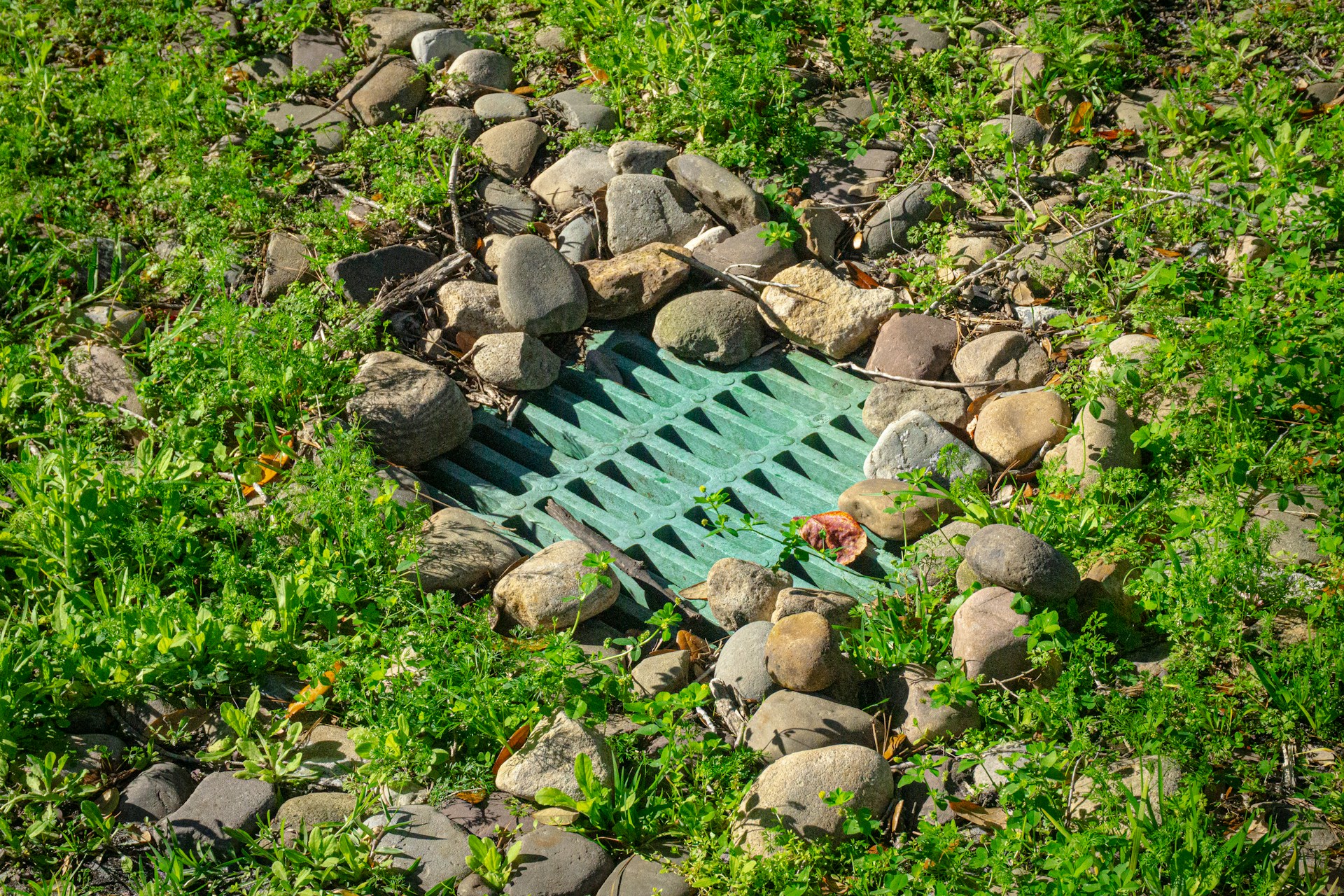
- Channel drains at doors, catch basins in low areas, and downspout lines can all tie into a larger system.
The right mix depends on your yard, soil, and how water moves across your property.
Tying drainage into the rest of the yard
Patio drainage should not be planned in a bubble. It needs to work with:
- Lawn grades and play areas
- Planting beds and mulch
- Driveways, walks, and neighboring patios
Features like rain gardens, dry wells, and well-placed plantings can help soak up and slow down runoff. Good grading and drainage services in Long Island consider every part of the property so fixing one area does not create a new issue somewhere else.
Choosing the Right Long Island Contractor for Patio Drainage
Not every installer focuses on drainage. You want a team that treats water management as a core part of the job, not an afterthought.
Questions to ask before you hire
Before you pick a contractor, ask:
- How much experience do you have with drainage and grading on Long Island homes and commercial sites?
- How do you check existing pitch, base condition, and soil type?
- Can you show examples of patios where you corrected drainage problems?
The answers will tell you a lot about how seriously they take water issues.
What a professional drainage assessment should include
A good assessment should start with a careful walk of your property. That often means:
- Checking slopes around the patio and house
- Looking at downspouts, leaders, and lawn grades
- Noting problem spots inside and out, such as damp rooms or cracked walkways
Tools like levels or elevation checks confirm what the eye sees. If there are underground pipes, camera inspections may be needed. You should receive a clear written plan that explains causes and lays out specific steps, not just cosmetic patches.
Long-term maintenance to keep water problems away
Once drainage is corrected, simple care goes a long way. Homeowners should:
- Keep channel drains, grates, and catch basins free of leaves and debris
- Watch joint sand and have it refreshed when needed
- Pay attention after big storms for any new low spots
It is also smart to have things checked after major yard changes, like adding a pool or driveway. With solid design, most maintenance is light and easy.
FAQs About Patio Drainage and Grading in Long Island
How much slope should my patio have away from the house, and how can I tell if it is correct?
Most patios should slope about 1/8 inch to 1/4 inch per foot away from the home. You can do a rough check with a level, but a professional can measure the pitch more accurately.
Can I fix minor puddling on my patio myself, or do I need a professional?
Small shallow puddles might look easy to fix, but they can point to deeper base or grading issues. It is usually best to have a drainage professional inspect it before trying a patch.
What is the difference between a swale and a French drain, and how do I know which one I need?
A swale is a shallow surface channel that moves water across the ground, while a French drain is a buried system with pipe and gravel that moves water below ground. Which one you need depends on how much water you have, your soil, and where the water has to go.
Will regrading or adding drainage disturb my existing landscaping and lawn?
Some disturbance is common, especially where trenches or new grades are needed. A careful contractor will plan the work to limit damage and restore lawn and plantings when the drainage work is done.
How long does it take to repair or regrade a typical residential patio on Long Island?
Time depends on patio size, how much must be lifted, and whether new drainage lines are added. A professional can give a more accurate timeline after seeing the site.
Are there local codes or regulations that affect how patio drainage must be handled on Long Island properties?
Many areas have rules about where water can be discharged and how close work can be to property lines. A local contractor should be familiar with these guidelines and plan your drainage system to follow them.
How often should I have my patio and drainage system inspected to prevent future problems?
Having things checked every so often, and after any major yard project, helps catch issues early. If you notice new puddles, movement, or damp areas, it is a good time for a professional review.
Get Started With Your Project Today
If you are ready to protect your property from water damage and improve your outdoor spaces, our team at Pure Masonry & Landscape Contractors is here to help. Explore our specialized drainage and grading services in Long Island to find solutions tailored to your landscape and budget. We will assess your property, explain your options clearly, and recommend the best approach for long-term results. Have questions or want to schedule a consultation? Simply contact us and we will follow up promptly.