Table of Contents
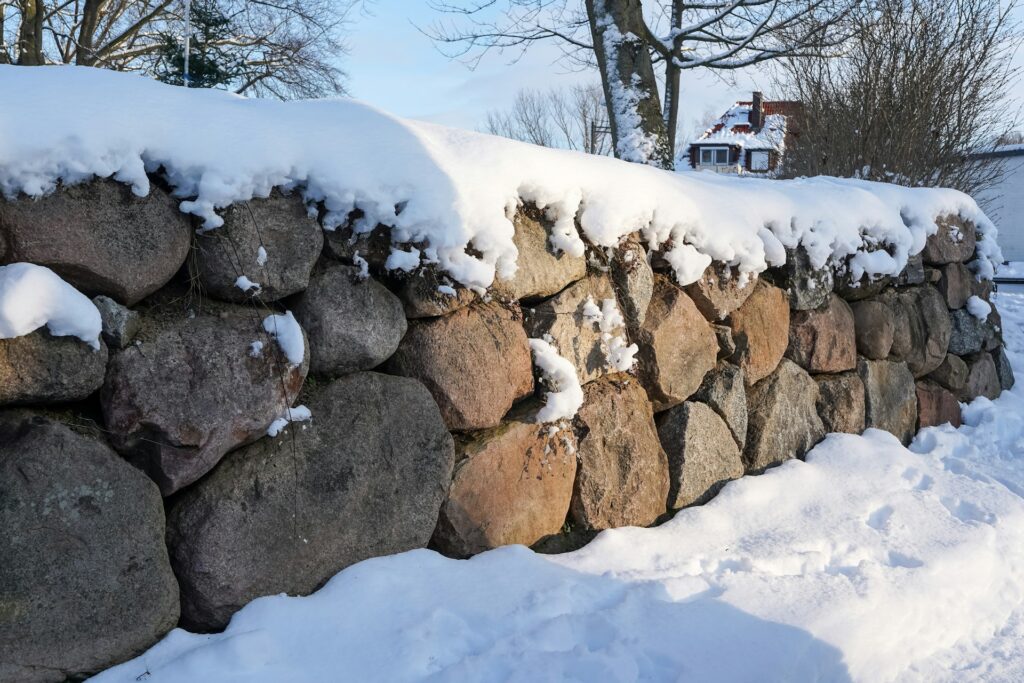
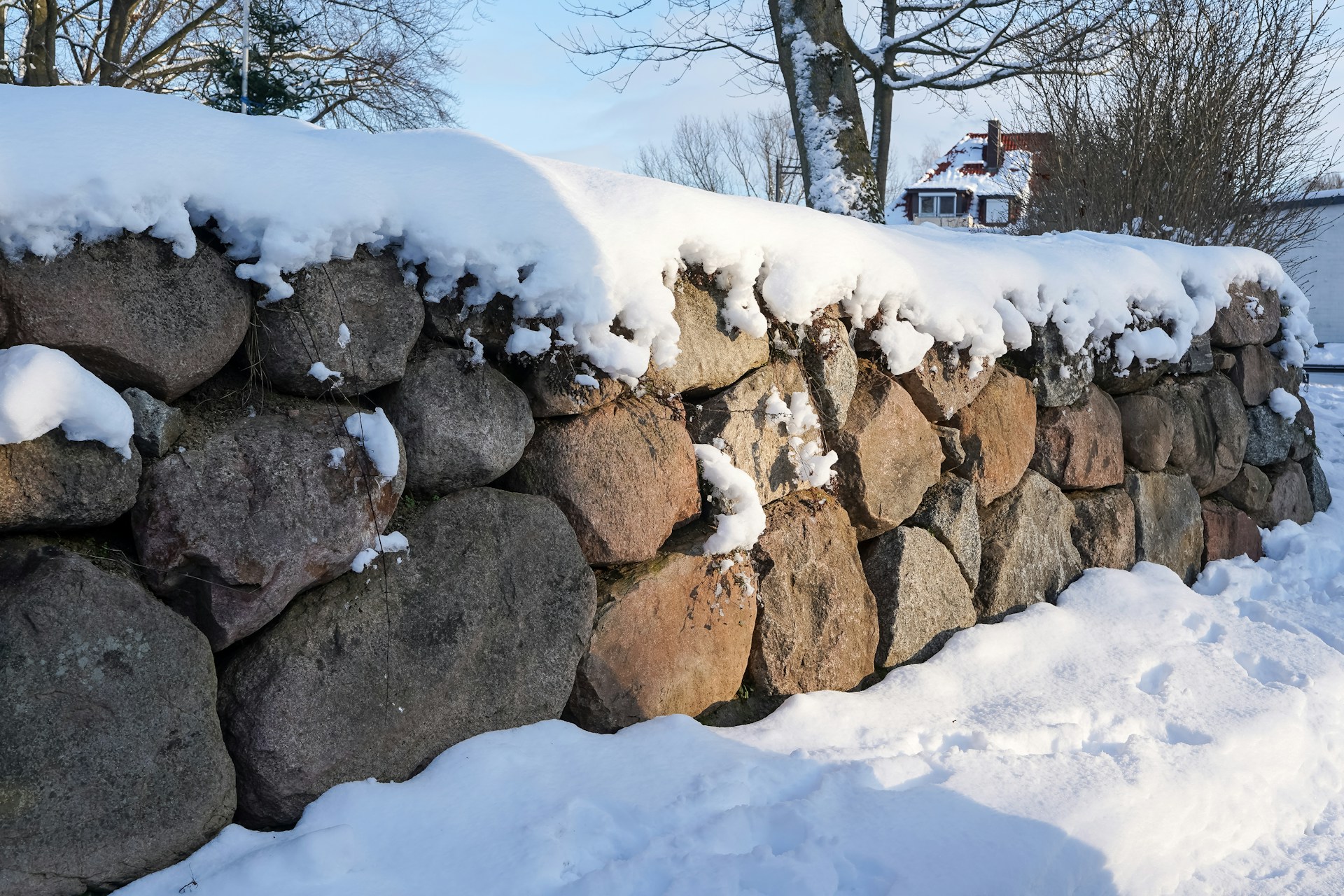
ToggleWater behind a retaining wall can cause serious trouble long before the wall looks like it is failing. Block, stone, concrete, and timber all need proper drainage to stay stable. Without it, trapped water adds pressure, soaks the base, and may freeze when temperatures drop.
Along Long Island’s North Shore, late-autumn rain, coastal moisture, compacted soil, and colder nights can create the right conditions for water to build up behind a wall. We recommend paying close attention after heavy rain, before repeated freeze-thaw cycles turn a small drainage concern into structural damage.
Protect Your Wall Before Winter Weather Arrives
When a retaining wall lacks winter drainage, water collects in the soil behind it instead of moving safely away. That water makes the soil heavier and pushes against the wall. If it reaches the base material, it can also weaken the support that keeps the wall level.
Over time, poor drainage may lead to:
- Leaning or bowing sections
- Cracks in concrete or separated block joints
- Shifted natural stone and loose capstones
- Bulging walls or movement at corners
- Complete failure in severe cases
A wall may appear sound during dry weather, then reveal trouble after a long stretch of rain or snowmelt. That is why we encourage property owners to look at retaining walls before winter settles in. Finding a blocked outlet or runoff issue early is generally far less disruptive than addressing a damaged wall during winter or after spring thaw.
Water Pressure Turns Small Gaps Into Big Problems
Hydrostatic pressure is simply the force created when water builds up in soil. If rainwater, melting snow, or runoff cannot pass through drainage stone and leave through a working pipe, it stays trapped behind the wall. Saturated soil becomes much heavier, and that weight pushes outward.
Different wall materials can show stress in different ways. Segmental block walls may bulge or separate at their joints. Natural stone walls can shift out of alignment. Poured concrete can crack when pressure becomes greater than the structure can handle. Even a well-built wall can struggle when its drainage system is clogged, damaged, or missing.
The wall itself is only part of the picture. As a retaining wall builder in Long Island, we look at where water starts and where it travels. Clay-heavy soil, sloped yards, downspouts, driveways, patios, and runoff from a nearby higher grade can all send more water toward a wall than expected.
Freeze-Thaw Cycles Can Shift the Wall Base
Winter makes drainage problems more destructive because water expands as it freezes. When water is trapped behind a wall, freezing soil can add force to an area already under pressure. As temperatures move above and below freezing, the soil can repeatedly expand, thaw, settle, and shift.
A retaining wall needs a stable, compacted base to stay level. When water reaches that base and freezes, it can lift sections of the wall upward. After thawing, those sections may settle unevenly. This movement can weaken the support beneath the wall and create openings where more water can enter.
Damage does not always happen in one dramatic event. We often see early warning signs after winter, such as small cracks, loose capstones, minor leaning, or joints that have begun to separate. By spring, continued water intrusion can turn those small changes into a larger reconstruction need.
Water management should begin before runoff reaches the wall. Roof drainage, paved surfaces, planting beds, neighboring grades, and higher portions of the property all need to be considered as part of the drainage path.
Watch for Signs of Drainage Failure
After rain or snowmelt, take note of what is happening around the wall. Water should not sit for long periods, pour over the top, or wash soil through the joints. Damp ground at the base may also point to water that is not moving through the system correctly.
Common warning signs include:
- Standing water near the wall
- Soil erosion or mulch washing away
- White mineral staining on stone, block, or concrete
- Muddy or clogged drainage outlets
- Water flowing over the wall or around its ends
Structural changes deserve prompt professional attention. A wall that leans, bows outward, cracks, separates at corners, or has uneven capstones may be reacting to water pressure or base movement. These are not cosmetic concerns, especially when freezing weather can make them worse.
Other clues can appear in the surrounding property. Soft ground, sinking pavers, struggling plants, and downspouts that empty near the wall may all signal drainage trouble. During an evaluation, we examine both the wall and the surrounding grade to identify whether the issue involves runoff, failed backfill, a blocked drainpipe, or movement within the wall itself.
Drainage Design for Retaining Walls
A properly drained retaining wall is built as a system, not just a vertical barrier. The design usually includes a compacted aggregate base, clean drainage stone behind the wall, filter fabric that keeps soil from clogging the stone, and a perforated drainpipe that carries water toward an approved outlet.
Drainpipes must have somewhere clear for water to go. An outlet blocked by soil, leaves, mulch, ice, or later property changes cannot do its job. We also consider how discharged water will move away without creating erosion or pooling elsewhere.
Surface water management may involve solutions such as:
- Adjusting grades to direct water away from the wall
- Extending roof runoff away from the backfill area
- Adding swales or catch basins where appropriate
- Repairing clogged or failed drainpipes
- Rebuilding compromised sections with proper drainage materials
The right approach depends on the wall height, soil conditions, slope, and amount of water reaching the area. Before damage spreads, a seasonal drainage review can identify early movement, poor grading, blocked outlets, and water pathways that need correction.
Build A Wall That Drains Reliably
Pure Masonry & Landscape Contractors can design drainage solutions that support lasting retaining wall performance through winter weather. Work with a retaining wall builder in Long Island to plan proper base preparation, drainage materials, and water management for your property. Contact us to discuss your retaining wall project with our team.
FAQs
Can A Retaining Wall Fail Because Of Poor Drainage?
Yes. Trapped water creates hydrostatic pressure and saturates the soil behind the wall. Over time, that pressure can cause cracking, bulging, leaning, shifting, or failure.
What Happens When Water Freezes Behind A Retaining Wall?
Frozen water expands and can add pressure behind the wall. Repeated freeze-thaw cycles can also move the base, loosen materials, and worsen existing drainage problems.
How Do I Know If My Retaining Wall Has A Drainage Problem?
Look for standing water, erosion, muddy outlets, white staining, cracks, leaning, bowing, loose capstones, or water flowing over and around the wall after rain.
Does Every Retaining Wall Need A Drainpipe?
Most structural retaining walls benefit from drainage stone, filter fabric, and a properly placed drainpipe with clear outlets. The exact system should match the wall’s height, soil, slope, and water conditions.
When Should I Call A Retaining Wall Builder In Long Island?
A professional assessment is wise if your wall is holding water, leaning, cracking, bulging, or showing erosion after rain. Addressing drainage concerns before repeated freeze-thaw cycles can help prevent more serious structural movement.